Ten YouTube Shorts Niches for an English-Speaking Audience (and the Three Rules Behind Them)
Almost every new creator starts with the same belief: a video has to go viral before it earns anything. I believed it too. Then I spent a long stretch pulling apart Shorts channels aimed at English-speaking viewers, and the pattern that came back was almost the opposite.
Plenty of channels with no famous videos, no ten-million-view moment and no recognisable brand were still running steadily. What they had in common was not luck and not production budget. They had picked one narrow topic and served one specific group of people properly.
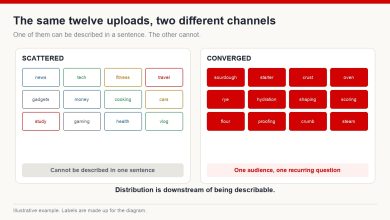
What follows is a shortlist of ten Shorts niches worth researching for an international audience, plus the three rules that decide whether any of them works for you. The spirit of the whole thing sits in one line: the narrower the niche, the better your odds.
Chasing what is trending is not a strategy
Viral and durable are two different things. A trend gives you a spike and then leaves you with an audience that never wanted the channel, only that one video. A narrow niche gives you something slower and considerably more useful: people who subscribed because they want exactly what you make next.
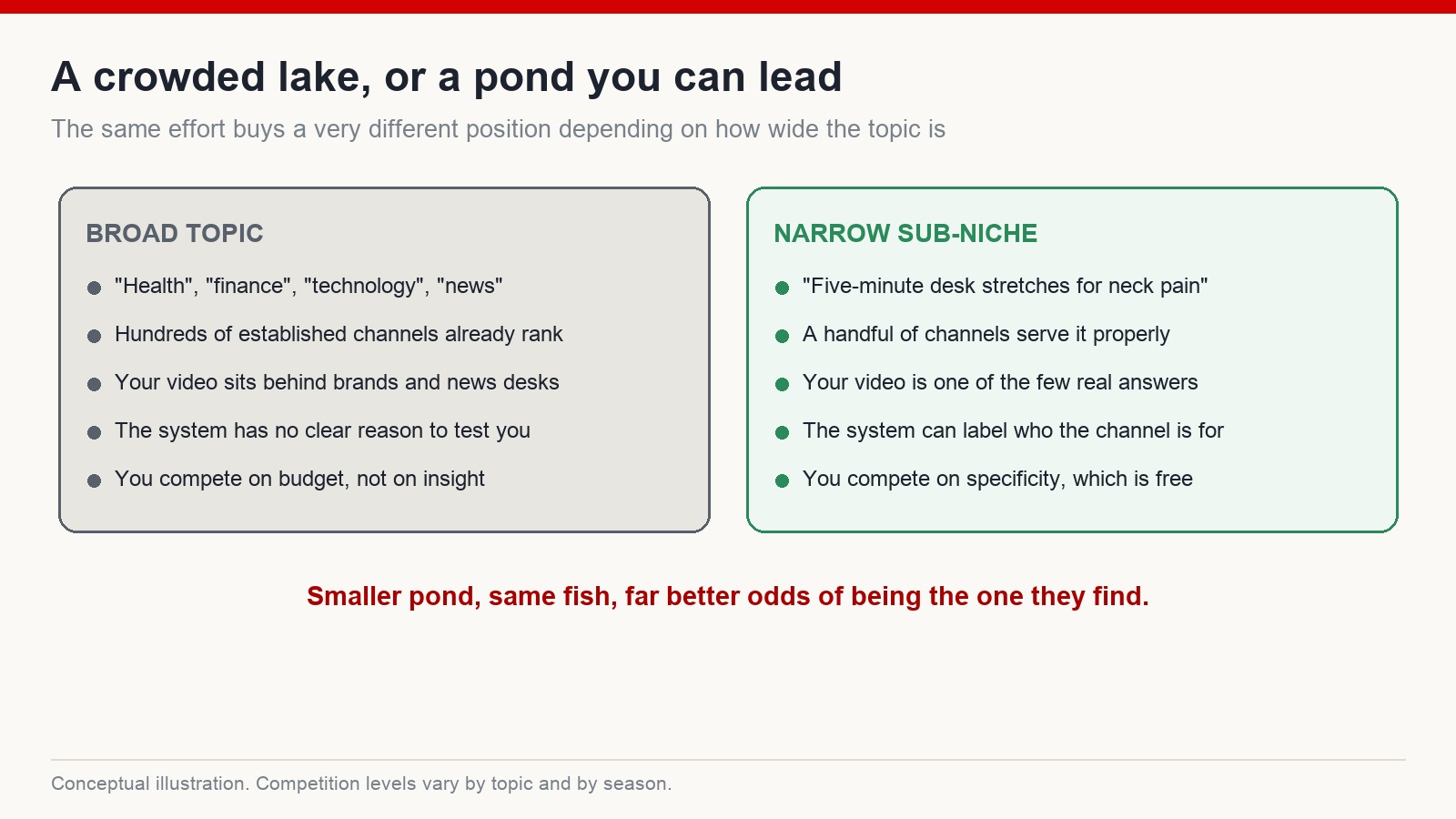
Think of it as choosing your water. A broad category is a lake full of large, well-funded, long-established channels. You can swim in it, but nothing about your video gives the recommendation system a reason to test you against them. A sub-niche is a pond. Same fish, far fewer competitors, and a real chance of being the one they find.
Why aim at English-speaking viewers at all
The honest answer is advertiser demand. The United States, the United Kingdom, Germany, Japan and a handful of similar markets carry large advertising budgets, viewers with real spending power, and whole industries with strong commercial value behind them. That combination tends to make the same volume of views worth more than it is in a low-cost ad market.
Two cautions, though, because this gets oversold constantly. First, that difference varies enormously by topic, season and format, and Shorts monetise on a completely different basis from long-form video. Second, none of it matters if the content is wrong. A high-value market is a multiplier on a working channel, not a substitute for one.
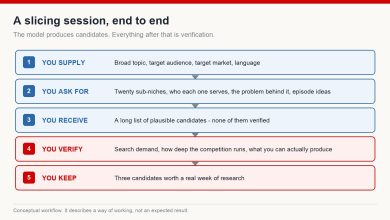
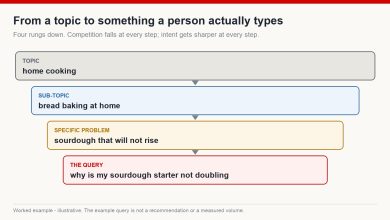
The practical move is not to fight for space in the busiest corners of those markets. It is to find the sub-niche – a narrow topic that sits inside a bigger one – where demand still exists and the number of creators serving it has not caught up.
Ten Shorts niches worth researching
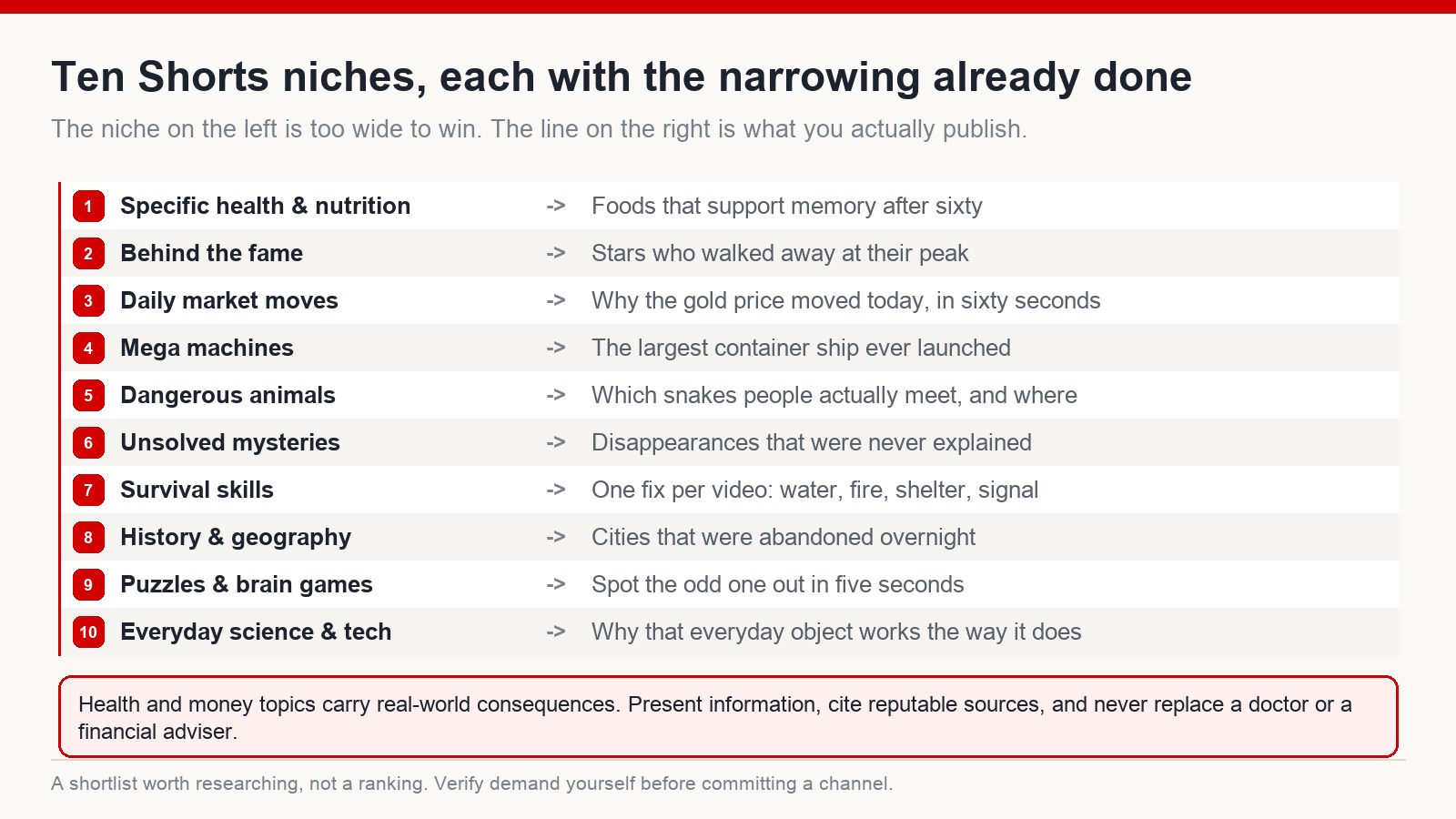
Read this list with one thing in mind: none of the ten headline items is a niche. Each one is a category that still has to be cut down. The right-hand side of each entry is closer to what you would actually publish.
1. Specific health and nutrition
Do not make general health content. Go to a defined problem: eating around kidney disease, foods associated with memory in older adults, meals for someone recently told they are pre-diabetic, vitamins by age group. These audiences are loyal because the information is hard to find and directly useful.
This category comes with an obligation. Present information, cite reputable sources, and tell viewers to talk to a clinician. Never let a script drift into advice that replaces a doctor.
2. Behind the fame
People are permanently curious about the back of the curtain. Stars who disappeared. Scandals that never got much coverage. Expensive failures. What life looked like after the peak. Fast narration over strong archive-style visuals suits the format almost perfectly.
3. Daily market moves
Gold, silver, oil, headline economic indicators, shifts in where money is flowing. There is a steady, recurring audience for a clear sixty-second explanation of what moved and why. Keep the role strictly informational – no forecasts, no promises, no investment advice.
4. Mega machines
The largest container ship. Aircraft that should not be able to fly. Mining trucks the size of houses. Heavy-lift cranes. Extraordinary engineering. Powerful images and fast cutting do most of the retention work for you here.
5. Dangerous animals
One of the most reliably evergreen categories there is. Venomous snakes, sharks, spiders, crocodiles, encounters in the wild. Curiosity plus tension is a very hard combination to scroll past.
6. Mysteries and strange events
Famous disappearances. Structures nobody can explain. Natural phenomena that look impossible. Contested moments in history. This material serialises beautifully, which is what brings viewers back rather than merely stopping them once.
7. Survival skills
Shorts and survival content fit together neatly because each video only has to solve one thing: water, fire, shelter, signalling, a single tool used properly. One problem per video is enough to be worth watching.
8. History and geography, told properly
Not the textbook version. Cities abandoned overnight. The strangest countries on earth. Expeditions that vanished. Civilisations that stopped. Storytelling is the entire difference between this working and this being a lecture.
9. Puzzles and brain games
The viewer is not watching, they are playing. Can you find the animal in five seconds? Which of these is the odd one out? Which answer is correct? Formats like this generate comments and rewatches at a rate almost nothing else matches.
10. Everyday science and technology
Short explanations of why an ordinary thing works the way it does, what a new device actually changes, how a robot solves a problem. There is a large standing audience for the feeling of having learned something in under a minute.
Three rules that keep the channel on course
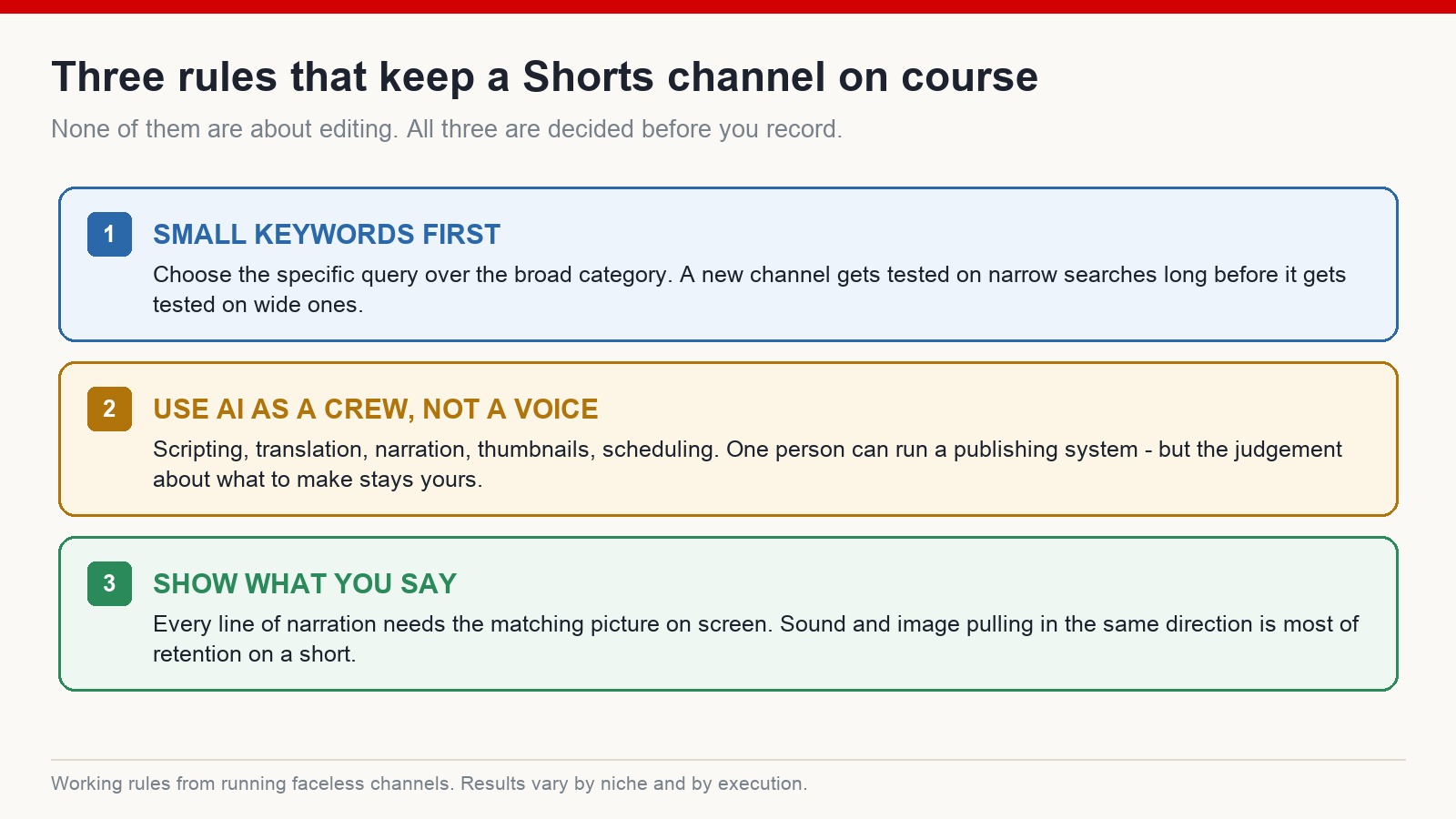
The list above is the easy part. These three decisions matter more, and all three are made before you record anything.
Rule one: choose the small keyword
Prefer the specific query over the broad category, every time. A new channel gets tested on narrow searches long before anything wide comes its way. Measuring demand before you commit is the step most people skip, and it is the one that decides whether the next fifty videos land anywhere.
On volume: for a brand-new channel I work in a deliberately small band rather than reaching for the biggest phrases available. That is a personal working range from running these channels, not a YouTube standard, and I bias towards the lower end when a channel has no history at all.
Rule two: use AI as a crew, not as a voice
Scripting, translation, natural-sounding narration, thumbnail drafts, scheduling – one person can genuinely run a publishing system now. What does not transfer is judgement. Which topic, which angle, which claim you are willing to stand behind: that stays with you, and it is the part that determines whether the channel is worth subscribing to.
Rule three: show what you say
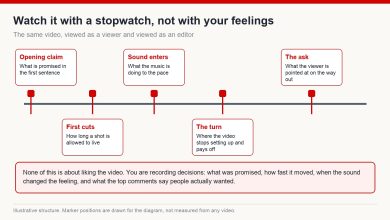
Every line of narration needs the matching picture on screen at the moment it is spoken. Sound and image pulling in the same direction is most of retention on a short. When they drift apart, the viewer feels it before they can explain it, and they leave.
One note on Shorts and brand-new channels
All ten niches suit Shorts. That does not automatically mean a brand-new channel should open with a wall of them. Think about timing rather than volume: Shorts are excellent at putting a channel in front of people who have never heard of it, and less good at teaching the system what a channel is for while it is still deciding. Use the format deliberately rather than in bulk from day one.
And if the thing holding you back is the language, that barrier is smaller than it looks. Narration, translation and subtitles are all solvable with tools that exist today. Understanding what an English-speaking audience actually wants is the harder skill, and it is the one worth your hours.
The point of all this
Big niches do not earn more by virtue of being big. A great many working channels started on a topic so specific it sounded like a joke, and grew because it answered a real question for a definable group of people.
Rather than fighting thousands of established channels for the whole pizza, take one slice small enough that you can be the best thing on it. That route is usually faster, steadier, and far easier to expand later into the neighbouring slices.
Which niche should a beginner pick?
One where you can list a hundred video ideas without straining, and still have more left. If you run out at thirty, the niche is too narrow or you do not find it interesting enough to sustain.
Do I need to appear on camera?
No. Every niche above can be built faceless with narration, stock footage, illustration and on-screen text.
How often should I re-evaluate the niche?
After a meaningful body of work rather than after a handful of uploads – somewhere in the range of thirty to fifty videos. Then compare retention, click-through and engagement against your own earlier videos, not against numbers you read somewhere, and decide whether to sharpen the angle or expand into a neighbouring sub-niche.
If you are stuck between a topic that a million people already make and one that a few thousand people search for each month, take the second. On modern YouTube the winner is rarely the biggest channel in the room. It is usually whoever understands one specific group of viewers better than anyone else bothered to.
If you want the full system for building a faceless channel for an international audience, that is what I teach at mmoyoutube.com. Results vary, and platform rules change – build accordingly.